_edited.jpg)

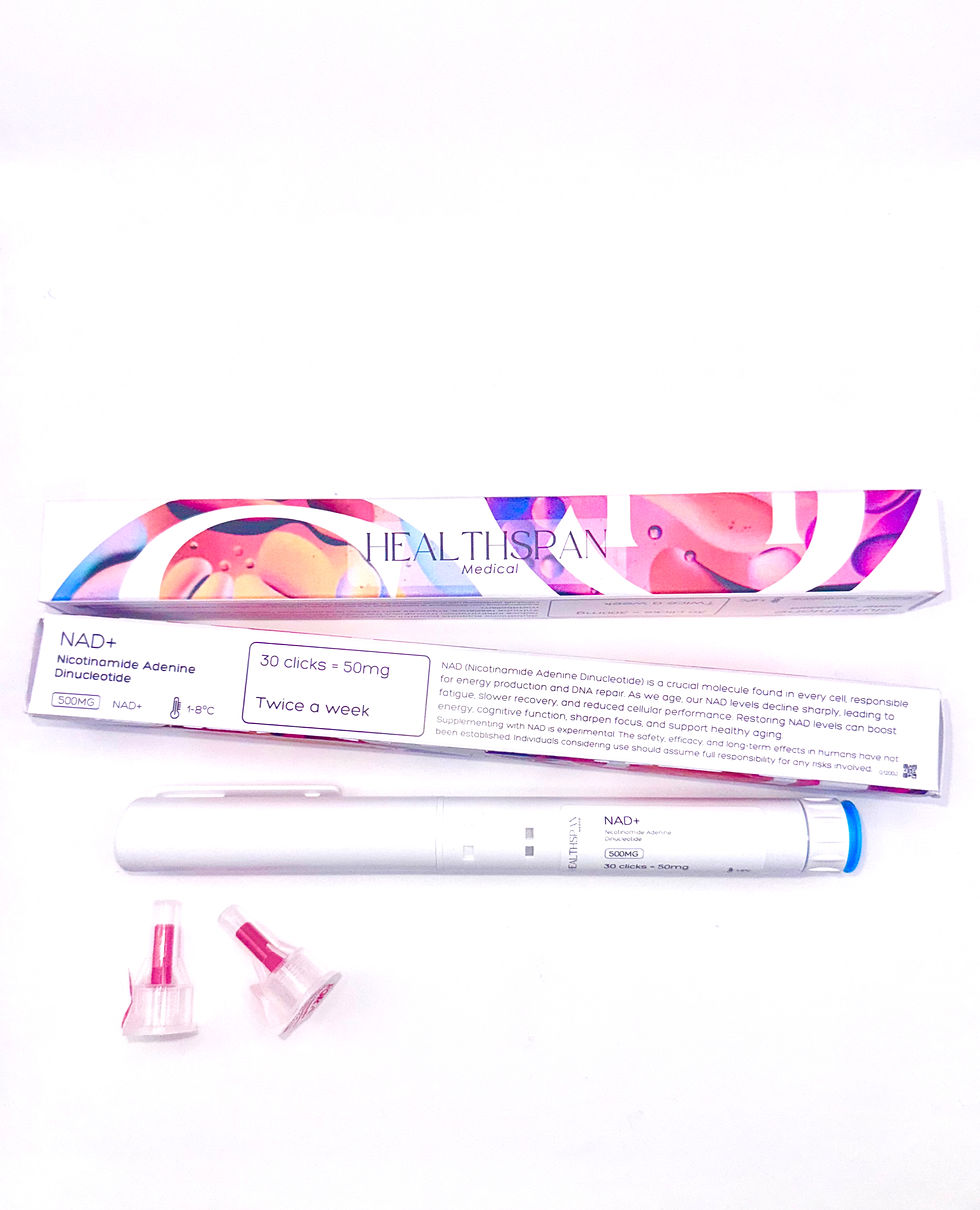
What Is NAD+?
NAD+ is a coenzyme found in all living cells, essential for energy production, DNA repair, and cellular signaling. It exists in two forms: NAD+ (oxidized, active) and NADH (reduced). NAD+ levels decline with age, stress, or illness, impacting metabolism and repair processes.
1. Energy Production (Mitchondria Health)
• NAD+ facilitates ATP synthesis in mitochondria by shuttling electrons during cellular respiration, converting nutrients (carbohydrates, fats, proteins) into energy.
• Impact: Powers cells, reducing fatigue and supporting metabolic health.
2. DNA Repair and Cellular Maintenance:
• NAD+ activates enzymes like PARPs (for DNA repair) and sirtuins (for gene regulation), protecting cells from damage and maintaining cellular integrity.
• Impact: Promotes cell repair, potentially aiding recovery from stress or injury.
3. Regulation of Cellular Processes:
• NAD+ modulates sirtuins, which control metabolism, inflammation, and aging pathways, and supports circadian rhythms via melatonin regulation.
• Impact: Reduces inflammation and supports sleep, enhancing overall health.
4. Antioxidant Defense:
• NAD+ (via NADH) neutralizes reactive oxygen species (ROS), reducing oxidative stress that damages cells.
• Impact: Protects tissues from oxidative damage, supporting longevity and disease prevention.
What NAD+ Does for Cognitive Function
NAD+ is a critical coenzyme in all cells. Its role in cognitive function is tied to its support for brain cell health, energy metabolism, and neuroprotection.
Here’s how NAD+ contributes:
1. Supports Brain Energy Metabolism:
• Function: NAD+ facilitates ATP production in neuronal mitochondria via the citric acid cycle and oxidative phosphorylation, providing energy for cognitive processes like memory, focus, and decision-making.
• Impact: Low NAD+ levels, common with aging or stress, impair brain energy, leading to brain fog or fatigue. Boosting NAD+ enhances neuronal energy, supporting mental clarity.
• Evidence: A 2021 randomized trial showed that nicotinamide riboside (NR, 300 mg/day), an NAD+ precursor, improved cognitive performance (e.g., attention, processing speed) by ~15% in older adults over 12 weeks.
2. Promotes DNA Repair and Neuronal Health:
• Function: NAD+ activates PARPs (poly-ADP-ribose polymerases) for DNA repair and sirtuins (e.g., SIRT1) for gene regulation, protecting neurons from damage caused by oxidative stress or inflammation.
• Impact: Protects against age-related cognitive decline, neurodegenerative diseases (e.g., Alzheimer’s), and neuronal damage from stress. Enhances synaptic plasticity, crucial for learning and memory.
• Evidence: A 2023 study in mice found that NMN (nicotinamide mononucleotide, 200 mg/kg/day) increased NAD+ levels and improved memory retention by ~20% in Alzheimer’s models.
3. Reduces Neuroinflammation:
• Function: NAD+ modulates sirtuins and CD38, reducing pro-inflammatory cytokines (e.g., IL-6, TNF-α) in the brain, which impair cognitive function.
• Impact: Lowers inflammation linked to cognitive decline, dementia, or brain fog, improving mental clarity and mood.
• Evidence: A 2022 human trial showed NMN (250 mg/day) reduced brain inflammation markers by ~18% in older adults, correlating with better cognitive test scores.
4. Supports Neurotransmitter Function and Circadian Rhythms:
• Function: NAD+ regulates sirtuins that influence melatonin production and circadian rhythms, impacting sleep quality, which is critical for cognitive health.
• Impact: Improves sleep, enhancing memory consolidation and cognitive performance. Poor sleep exacerbates cognitive issues, and NAD+ helps restore balance.
