_edited.jpg)

Alpha-Lipoic Acid (ALA)
What It Is
ALA is a sulfur-containing compound that functions as a coenzyme in mitochondrial energy metabolism.
Acts as both a fat- and water-soluble antioxidant.
Available as a supplement and sometimes used in integrative medicine for metabolic and neurological conditions.
Benefits
Antioxidant Protection
Regenerates other antioxidants (vitamin C, vitamin E, glutathione).
Reduces oxidative stress, which is involved in aging and chronic disease.
Metabolic Health
Improves insulin sensitivity and glucose metabolism in type 2 diabetes.
May reduce symptoms of diabetic neuropathy (nerve pain, tingling).
Neurological Support
Studied for protection against neurodegenerative diseases (Alzheimer’s, Parkinson’s).
Crosses the blood-brain barrier.
Metal Chelation
Has some ability to bind heavy metals, though its effectiveness is weaker than DMSA or DMPS.
Often discussed in “cutler-style” chelation protocols in combination with DMSA.
DMSA (Dimercaptosuccinic Acid)
What It Is
A synthetic compound with strong sulfur groups that bind to heavy metals.
An FDA-approved chelating agent for lead poisoning.
Taken orally, usually in cycles, under medical supervision.
Benefits
Heavy Metal Chelation
Removes lead from the body effectively.
Can also bind to and help excrete mercury, arsenic, and cadmium.
Increases urinary excretion of metals.
Safety Profile
Generally safer than older chelating agents like BAL (British Anti-Lewisite).
Does not appear to mobilize metals into the brain (a risk with some other chelators).
Potential Adjunctive Benefits
May improve symptoms in children with lead toxicity (neurocognitive and behavioral).
Sometimes explored in autism and neurodevelopmental conditions, though evidence is limited and controversial.
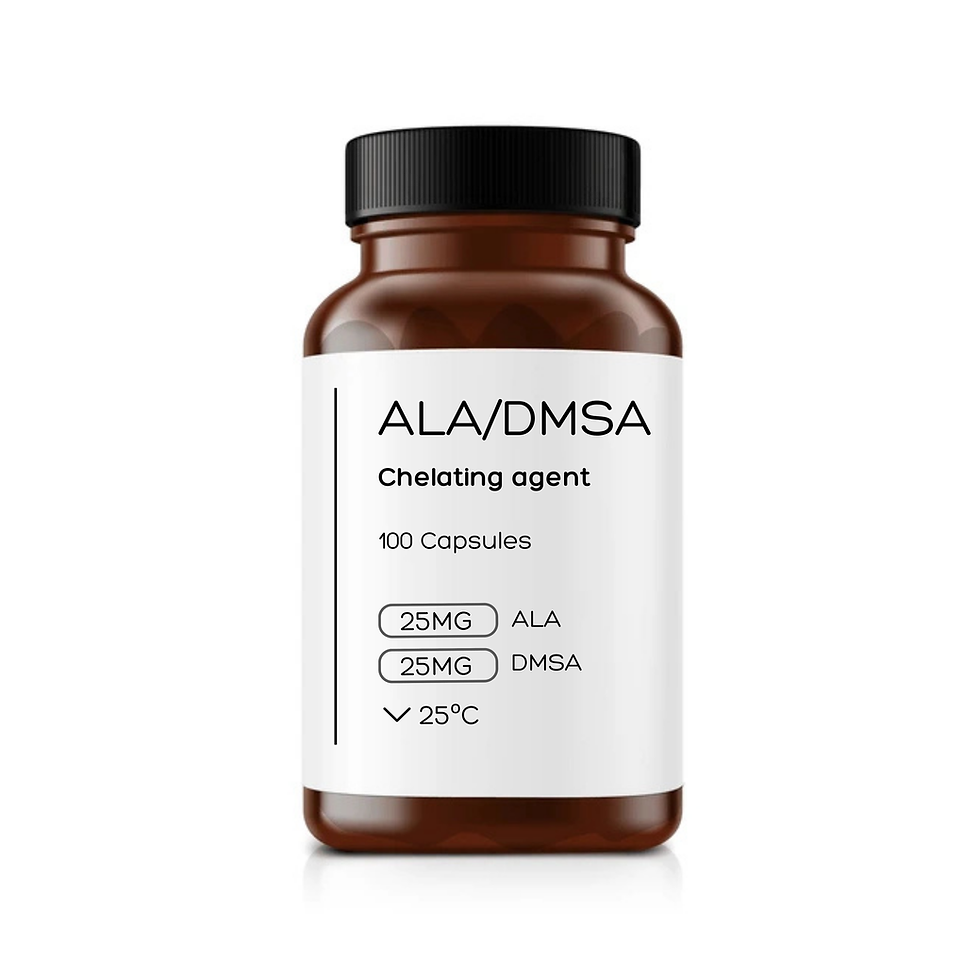
ALA + DMSA Together
In alternative and integrative medicine, ALA and DMSA are sometimes combined in chelation protocols:
DMSA removes metals from blood and soft tissues.
ALA can cross the blood-brain barrier, potentially mobilizing metals from the central nervous system.
Important caveat: Mobilization of metals without proper binding and clearance can redistribute toxins, leading to worsening symptoms. This is why strict dosing schedules and medical supervision are emphasized.
Risks and Safety
ALA: Generally safe up to ~600 mg/day. High doses may cause nausea, low blood sugar, or rare autoimmune insulin syndrome.
DMSA: Can cause gastrointestinal upset, rash, or changes in blood counts. Should only be used under medical supervision with lab monitoring.
Combination protocols: Risks include mineral depletion (zinc, copper, magnesium), redistribution of metals, and overuse without medical oversight. Supplementation with essential minerals is often necessary.
